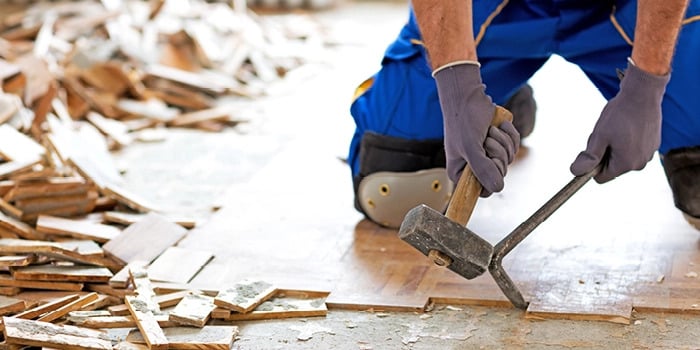
You don't have to work in construction or spend all day using power tools to experience contact stress. It can happen anytime you rest your wrists on the edge of a desk, kneel on a concrete floor, or grip a tool for hours at a time.
But a few simple changes to your workspace or the way you work can go a long way toward preventing discomfort and reducing your risk of injury.
Here's what contact stress is, where it happens, and what you can do about it.
What is contact stress?
Contact stress happens when a part of your body repeatedly presses against a hard edge, sharp surface or narrow handle. Over time, that pressure can irritate nerves, tendons, and other soft tissue, leading to pain, numbness, or tingling.
It's often combined with other ergonomic risk factors—like repetitive motions, awkward postures, or forceful gripping—which can increase the risk of a musculoskeletal disorder (MSD).
Contact stress most commonly affects the:
- Wrists
- Hands and fingers
- Forearms
- Elbows
- Knees
- Feet
Common contact stress problems and how to fix them
Contact stress can show up almost anywhere on the body, depending on the task. Here are some of the most common trouble spots—and a few simple ways to reduce the pressure.
Wrist contact stress
Resting your wrists on the edge of a desk or workbench may not seem like a big deal, but over time it can put pressure on nerves and blood vessels.
Try this:
- Pad or round off sharp desk edges
- Keep your keyboard and mouse close to your body
- Adjust your chair so your forearms stay roughly parallel to the floor
- Avoid resting your wrists while typing
Elbow contact stress
Leaning on hard armrests, desks, or work surfaces can place constant pressure on your elbows, irritating the nerves and soft tissue underneath.
Try this:
- Add padding to armrests or work surfaces
- Avoid leaning on your elbows for long periods
- Change positions throughout the day
Knee contact stress
Jobs that require frequent kneeling—such as construction, maintenance, or cleaning—can put significant pressure on the knees, especially on concrete or other hard surfaces.
Try this:
- Wear cushioned knee pads
- Use kneeling mats whenever possible
- Raise the work to a more comfortable height when you can
- Alternate between kneeling, standing, and sitting tasks
Hand and finger contact stress
Thin tool handles or tools with sharp edges can force you to grip harder than necessary, creating pressure points in your hands and fingers.
Try this:
- Choose tools with padded or ergonomically designed handles
- Replace damaged or worn grips
- Switch hands when possible
- Take short breaks during repetitive tasks
Foot contact stress
Standing on hard surfaces for long periods can put extra stress on your feet, legs, and lower back.
Try this:
- Use anti-fatigue mats where appropriate
- Wear supportive footwear designed for your work environment
- Shift positions throughout the day
- Sit when the task allows
Preventing contact stress starts with awareness
Contact stress doesn't usually happen overnight. It develops gradually, which makes it easy to overlook until discomfort becomes a bigger problem.
Watch for signs like:
- Numbness or tingling
- Soreness at the end of the workday
- Tenderness where the body presses against equipment or work surfaces
- Reduced grip strength
- Aches that improve after time away from work
If these symptoms become common, it's a good time to evaluate the task, workstation, or tools involved. Simple changes—like adding padding, improving workstation setup or rotating tasks—can help reduce unnecessary pressure and lower the risk of more serious ergonomic injuries.