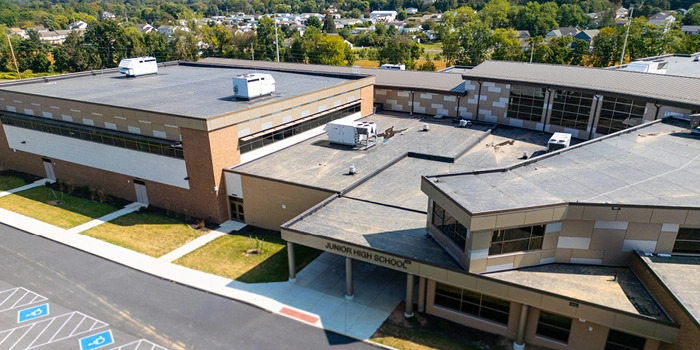
When it comes to protecting a school building, the roof does a lot of heavy lifting. It shields classrooms, gyms, offices, and common areas from wind, rain, hail, snow, and temperature swings day after day. But because it’s out of sight, it’s often out of mind—until a problem starts disrupting the school day.
Regular roof inspections and thoughtful contractor selection should be part of any comprehensive Roof Management Program and can help schools catch small issues before they turn into costly repairs, operational disruptions, or insurance claims. Here are a few building maintenance tips to help protect your property, budget, and the people who rely on your building every day.
Why roof inspections matter for schools
School roofs take on constant wear from changing weather, aging materials, and daily building operations. And because many school buildings are large or spread across multiple campuses, small issues can be difficult to spot without regular inspections.
Routine inspections can help identify:
- Cracked or damaged roofing materials
- Standing water or drainage issues
- Loose flashing or roof penetrations
- Wind or hail damage
- Interior moisture intrusion
- Debris buildup that traps moisture
The National Roofing Contractors Association (NRCA) recommends regular roof inspections and maintenance to help extend the life of roofing systems and identify concerns early.
For schools, preventative maintenance can also help reduce disruptions to classrooms, technology, gymnasiums, and other shared spaces.
Building maintenance tips for school roof inspections
A proactive maintenance plan can help schools address minor concerns before they become major expenses.
- Schedule inspections twice a year: Many roofing professionals recommend inspections in the spring and fall, along with additional checks after severe weather events like hailstorms, high winds, or heavy snow. Seasonal inspections can help schools catch weather-related damage early and plan repairs before the next season arrives.
- Keep maintenance records organized: Document inspection dates, repair history, contractor information, and photos of roof conditions over time. Good documentation can help facility teams track recurring issues, prioritize budgeting decisions, and support insurance claims if damage occurs.
- Pay attention to drainage: Clogged drains and standing water can shorten the lifespan of a roofing system and increase the likelihood of leaks. Regularly clearing drains, gutters, and rooftop debris can help water move safely away from the building.
- Limit unnecessary rooftop traffic: Schools often have rooftop HVAC systems and equipment that require servicing throughout the year. Designated walk paths can help reduce accidental damage caused by foot traffic during maintenance visits.
- Address small repairs before they grow: What starts as a small puncture or loose flashing detail can quickly turn into interior water damage once moisture enters the building envelope. Prompt repairs are often less disruptive—and less expensive—than emergency restoration work later.
- Hiring the right roofing contractor for your school: Choosing the right contractor is just as important as scheduling inspections. Schools should look for contractors who understand large commercial roofing systems and prioritize communication, safety, and quality workmanship. The NRCA recommends thoroughly vetting contractors before starting roofing projects.
Questions schools should ask before hiring a roofing contractor
Are they licensed and insured?
Verify the contractor carries proper licensing, liability insurance with at least a $1 million coverage limit, and workers’ compensation coverage where required. Ask for current certificates and confirm coverage is active for the duration of the project and the school district is properly listed as an additional insured.
This can help reduce liability concerns for the school district.
Do they have experience with school buildings?
Schools have unique scheduling, safety, and operational considerations. Contractors with experience working on occupied school campuses may be better prepared to minimize disruptions and coordinate around school hours or events.
Can they provide references?
Ask for references from other schools, municipalities, or large commercial projects. Speaking with past clients can provide insight into communication, timeliness, and workmanship.
Will they provide a detailed written proposal?
A clear proposal should outline:
- Scope of work
- Materials being used
- Timeline expectations
- Warranty information
- Cleanup responsibilities
- Payment terms
Clear communication upfront can help avoid misunderstandings during the project. EMC Risk Control is available to review plans and specifications to ensure new roofing systems are adequate for the geographic region.
What safety procedures do they follow?
Roof work involves fall hazards and active work zones. Contractors should follow OSHA safety standards and maintain clear jobsite safety procedures.
This is especially important on active school campuses where students, staff, and visitors may be nearby.
Does the bid seem too good to be true?
A significantly lower bid may sometimes indicate shortcuts in labor, materials, or safety practices. The NRCA advises building owners to carefully evaluate unusually low bids.
The goal isn’t simply to find the lowest price—it’s to find long-term value and reliable workmanship.
Small maintenance steps can help schools avoid bigger problems
School buildings support students, staff, and communities every day. Staying proactive with roof inspections and contractor selection can help schools reduce disruptions, extend roof life, and better manage long-term maintenance costs.