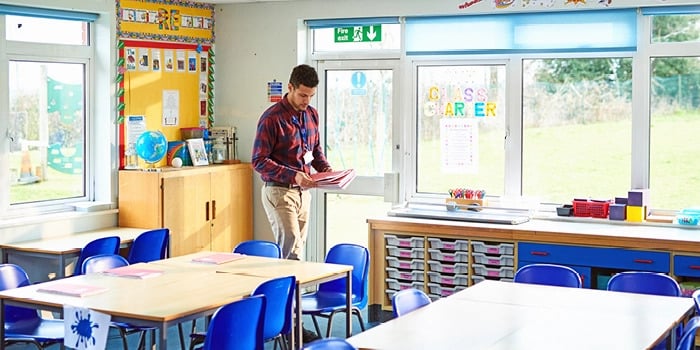
A new school year brings plenty of activity before the first bell even rings. Teachers are rearranging classrooms. Custodians are moving furniture and supplies. Food service teams are restocking kitchens. Office staff are settling back into hours at their desks.
All that lifting, reaching, bending, pushing, and repetitive work can also bring something less welcome: Ergonomic risks.
Ergonomic injuries don’t always happen because of one obvious accident. Often, they develop over time as repeated movements, awkward positions, or physically demanding tasks put stress on the body.
What to watch for as school gets back in session
First, what is ergonomics? Simply put, ergonomics means fitting the job to the person doing it. That could mean adjusting a workstation, changing where supplies are stored, or finding an easier way to move a heavy load.
The goal of ergonomics is to reduce strain and help prevent work-related musculoskeletal disorders (MSDs), which can affect muscles, tendons, nerves, joints, and other parts of the body.
An ergonomic hazard is a workplace condition or task that puts unnecessary physical stress on an employee. And schools have plenty of opportunities for those hazards to show up—especially during the rush to get ready for a new year.
Here are five ergonomic hazards to watch for as classrooms come back to life.
1. The classroom setup shuffle
Desks, tables, bookcases, boxes, and classroom equipment don't move themselves. During back-to-school setup, employees may spend hours lifting, carrying, pushing, and pulling items that aren't part of their normal day-to-day workload.
OSHA identifies excessive force, awkward postures, and repetitive tasks among the factors that can contribute to musculoskeletal disorders.
Look for: Employees lifting bulky items alone, twisting while carrying boxes, reaching overhead to store materials, or trying to move heavy furniture without the right equipment.
Reduce the risk: Use carts or other material-handling equipment when available. Break large loads into smaller ones and use team lifts for items that can't be safely handled by one person. Frequently used supplies should also be stored where employees can reach them without excessive bending or stretching.
2. Adult bodies, kid-sized furniture
Teachers, paraprofessionals, and other staff may spend more time than you think sitting in student chairs, leaning over low desks, or crouching beside students.
Those positions may be fine for a few minutes. Repeated throughout the school day, however, they can put added strain on the back, neck, shoulders, and knees. NIOSH notes that awkward and sustained postures can contribute to work-related musculoskeletal disorders.
Look for: Staff regularly bending at the waist to help students, working from low tables, or sitting for extended periods in furniture designed for children.
Reduce the risk: Give employees access to adult-sized seating and encourage them to bring work to a comfortable height whenever possible. Small changes—like sitting in an adult chair next to a student rather than hunching over a desk—can reduce unnecessary strain.
3. Workstations that need a reset
The beginning of the school year is also a good time to check workstations. Teachers, administrators, and office staff can spend significant portions of their day on computers, and a setup that worked for one employee may not work for another.
Look for: Monitors that cause employees to look up or down for long periods, chairs that don't provide adequate support, keyboards or mice that require excessive reaching, or employees leaning forward to see their screens.
Reduce the risk: Adjust chairs, monitors, and frequently used equipment to help staff maintain comfortable, neutral positions. NIOSH also recommends avoiding prolonged sitting or standing and incorporating short breaks from computer work.
4. Cafeteria work that adds up
School kitchens can be especially busy at the start of the year as staff gets back into the rhythm of preparing and serving hundreds of meals. Repeated chopping, stirring, reaching, and lifting can put stress on hands, wrists, shoulders, and backs.
Look for: Repetitive motions performed for long periods, reaching across deep work surfaces, lifting large containers or supplies from the floor, and pushing heavily loaded carts.
Reduce the risk: Keep frequently used items within easy reach, use carts and mechanical aids when possible, and consider rotating tasks that use different muscle groups. OSHA also recommends reducing load weights and positioning work to limit excessive reaching.
5. Custodial tasks that require a little muscle
Custodial teams encounter ergonomic risks year-round, but preparing buildings for students can add even more lifting, moving, and repetitive work.
Think about carrying supplies, pushing cleaning carts, moving furniture or equipment, emptying trash, and working above shoulder height. The risk can increase when several factors happen at once—for example, an employee lifting a heavy object while bending and twisting.
Look for: Heavy or awkward loads, overfilled carts, repeated overhead reaching, and tasks that require employees to maintain uncomfortable positions.
Reduce the risk: Make sure the right equipment is available for moving heavy loads, keep carts and wheels well maintained, store heavier items at accessible heights, and encourage employees to ask for help rather than muscle through a difficult lift.
Putting it all together
You don't need a complicated assessment to start finding problems. Take a walk through your school and watch people work.
Are employees reaching, twisting, or bending repeatedly? Are they struggling to move something? Do they shake out their hands, roll their shoulders, or regularly mention soreness after certain tasks? OSHA recommends observing work practices and talking with employees as part of proactively identifying ergonomic issues before they result in injuries.
Pay attention to patterns, too. Injury records, workers' compensation claims, and employee reports can help identify jobs or tasks that deserve a closer look.
Most importantly, involve the people doing the work. They often know exactly which cart is difficult to push, which shelf is too high, or which task leaves their back aching by the end of the day. Their feedback can point to practical fixes you might otherwise miss.