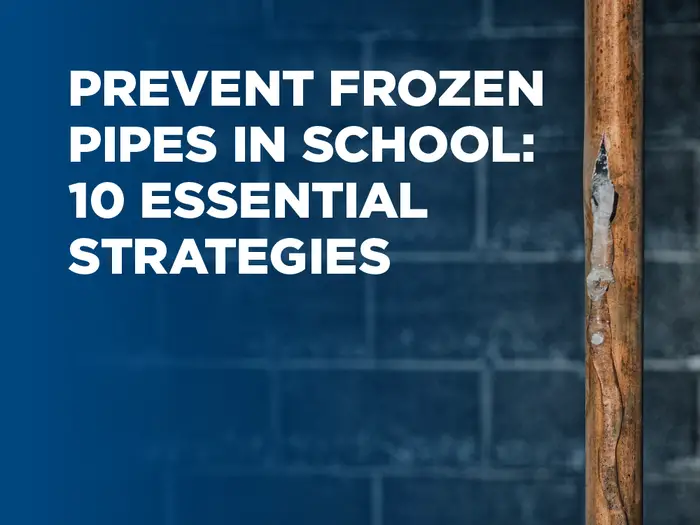
When it comes to safeguarding school buildings from the havoc caused by frozen pipes, prevention is the ultimate key. Pipes hidden behind walls, in basements or in lofts pose a significant challenge as issues often go undetected until they escalate into a crisis. Here are ten strategies schools can use to proactively prevent frozen pipe disasters.
10 Tips to Prevent Frozen Pipes
- Regular Inspections
Routine visual inspections are the first line of defense. Inspect all water pipes for leaks or damage. Even inaccessible pipes behind walls can show signs, like leaking, indicating a problem that needs attention. - Identify and Drain Exposed Pipes
In addition to outdoor systems, assess pipes in transitional areas like crawlspaces and uninsulated enclosures. Consider insulation upgrades to those areas and be sure to drain exposed pipes before freezing temperatures set in. This includes outdoor systems like sprinklers and water pipes in unheated buildings such as storage facilities. - Maintain Fire Suppression Systems
Ensure fire suppression systems are inspected and serviced annually by a fire protection contractor. If you have a dry pipe fire suppression system, make certain the air compressor is properly operating and water hasn’t entered the sprinkler lines. - Schedule Pre-Winter Maintenance
Go beyond sealing cracks and bolstering insulation. Collaborate with HVAC experts to optimize heating systems, ensuring consistent warmth throughout the school. Consider weatherizing measures and door and window upgrades for added protection. - Provide Heat for Exterior-Wall Pipes
Ensure that there is an adequate heat supply for water lines along exterior walls. Short-term measures like leaving interior doors open and allowing faucets to drip can alleviate pressure. Long-term solutions involve adding insulation or heat tape. A holistic approach ensures sustained warmth and minimizes the risk of freezing. - Be Proactive About Cold Weather Checks
In extreme cold, conduct periodic temperature checks in vulnerable areas, like riser rooms, basements and exterior wall pipes. Engage maintenance teams in regular walkthroughs to identify and address temperature fluctuations promptly.Pro tip: If unseasonably cold temperatures are forecasted, take measure to prevent frozen pipes by removing a few ceiling tiles to let warm air circulate above the ceiling where domestic water lines or fire sprinkler pipes are present. - Implement Monitoring Systems
Consider integrating smart monitoring systems that provide real-time temperature updates and alerts. These systems oversee building temperatures and heating systems, and can signal pipe or valve breakages, offering remote alerts so you can take prompt action. - Be Prepared With Backup Power Sources
Invest in backup power systems with automated fail safes. These systems ensure continuous heating to prevent pipe damage during power outages and HVAC system failures. - Maintain Minimum Temperatures
Monitor building temperatures to ensure that they remain at least 55 degrees during freezing conditions. Note that exterior wall temperatures will be colder than the interior. - Document Maintenance
Maintain comprehensive records of maintenance activities, identified weak spots and implemented solutions. Documenting vulnerabilities ensures that they are protected and will be checked in the future, even if new personnel take over.
By implementing these preventive measures, schools can significantly reduce the risks associated with frozen pipes, ensuring a safe and operational environment for students and staff.
Learn More About Winter Safety
Loading...
Loading...