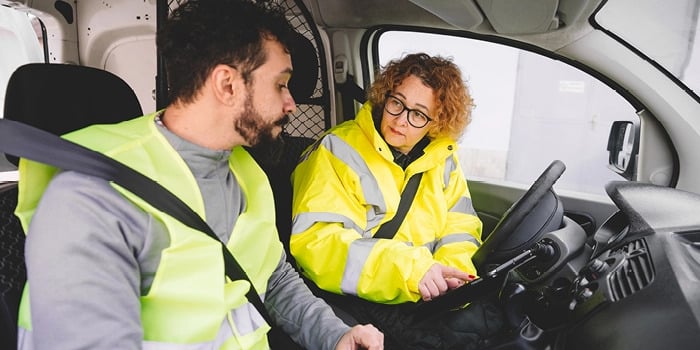
Whether your company operates two vehicles or 200, every mile driven on the job comes with risk. A well-designed fleet safety program helps reduce crashes, protect employees, and keep vehicles on the road.
The best programs aren't built around a binder on a shelf. They're built around everyday habits—hiring the right drivers, maintaining vehicles, providing ongoing training, and creating a culture where safety is part of the job.
Here are 10 ways to build a fleet safety program that works.
1. Put your expectations in writing
A written fleet safety program gives everyone the same playbook. It tells drivers what's expected before they ever turn the key and gives managers a consistent way to reinforce safe habits.
Your policy should cover topics like:
- Driver qualifications
- Seat belt use
- Distracted driving
- Vehicle inspections
- Crash and near-miss reporting
- Vehicle maintenance responsibilities
- A clear plan for using fleet safety data to coach, support, and recognize employees
Keep it practical, easy to understand, and review it regularly as your fleet grows.
2. Hire with safety in mind
A safer fleet starts before someone gets behind the wheel.
Review motor vehicle records (MVRs), verify licenses and certifications, and consider an applicant's driving history as part of the hiring process. Once drivers are on board, continue checking MVRs periodically so you can spot trends and address concerns early.
Check out our list of recommended driver qualification criteria for more tips.
3. Make training an ongoing conversation
Even your best drivers can pick up bad habits over time.
Instead of treating driver training as a one-time event, build it into your routine. Short refresher sessions throughout the year can reinforce topics like defensive driving, backing safely, distracted driving, and driving in bad weather.
The goal isn't to check a box—it's to keep safe driving top of mind.
4. Set clear rules for the road
Your drivers shouldn't have to guess what's acceptable.
Establish clear policies around seat belt use, cell phones, speeding, fatigue, impaired driving, and reporting vehicle issues. Then make sure those expectations are applied consistently across the organization.
When everyone follows the same rules—including managers—it's easier to build accountability.
5. Don't wait for maintenance problems to find you
Vehicle maintenance is one of the simplest ways to prevent roadside breakdowns and crashes.
Create a preventive maintenance schedule and encourage drivers to perform a quick walk-around before every trip. Catching worn tires, faulty lights, or low fluid levels early can prevent much bigger problems later.
6. Let technology do some of the heavy lifting
Technology can give you valuable insight into driving behaviors that are hard to see otherwise.
Depending on your operation, tools like telematics, GPS tracking, dash cameras, and driver scorecards can help identify trends before they become serious incidents.
The most successful fleets use this information to coach drivers—not just correct them.
7. Learn from every close call
Not every lesson comes from a crash.
Near misses, traffic citations, and minor incidents can reveal gaps in training, maintenance, or scheduling before someone gets hurt.
When something happens, look beyond the immediate cause. Ask what contributed to the incident—and what changes could help prevent it from happening again.
8. Recognize safe driving
People notice when safety only gets attention after something goes wrong.
Take time to recognize drivers who consistently make safe choices. Positive reinforcement, combined with timely coaching when needed, helps build the kind of culture where employees want to do the right thing.
9. Make safety part of your culture
A fleet safety program is only as strong as the support behind it.
When leaders follow the same policies, talk about safety regularly, and encourage employees to speak up about concerns, safety becomes part of the company's culture—not just another policy.
10. Keep improving
Your fleet will change over time, and your safety program should, too.
Once a year, step back and review what's working. Look for patterns in crashes, maintenance records, and driver performance, then update your policies and training as needed.
The best fleet safety programs are never really finished—they continue to evolve alongside your business.
Benefits of fleet driving safety programs
Investing in fleet safety pays off in more ways than one. A well-designed program can help you:
- Reduce crashes and injuries
- Lower repair and maintenance costs
- Minimize vehicle downtime
- Improve driver accountability
- Support regulatory compliance
- Protect your employees and your business
A fleet safety program doesn't have to be complicated to be effective. Start with the basics, stay consistent, and look for opportunities to improve over time. Small changes can make a big difference on the road.