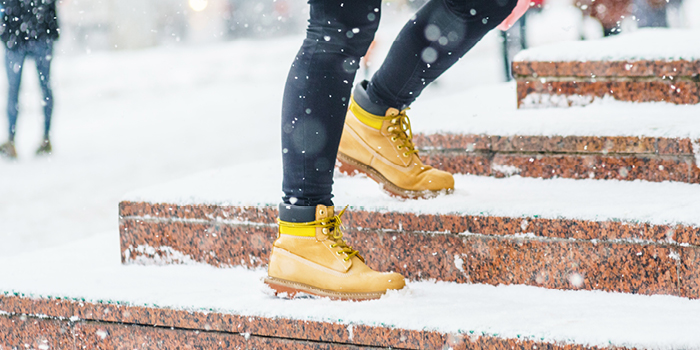
Winter brings a higher risk of slips and falls, so staying prepared is key. Most accidents happen between December and March, but a solid plan and ongoing vigilance can help keep employees and visitors safe—no matter how unpredictable the weather gets.
Winter weather safety tips at work
If you haven’t already, now is the time to put a winter safety plan in place. Here are key steps to minimize risks:
- Review snow and ice removal plans: Go over your contract with your service provider or establish an in-house plan. Define responsibilities, timing, and priorities for parking lots, walkways, and entrances.
- Identify problem areas: Walk the site to spot high-risk zones and choose locations for snow piles to prevent melting and refreezing on walkways.
- Clear drains and walkways: Remove obstructions that could lead to ice buildup, such as leaves and debris. Ensure downspouts direct water away from walking paths.
- Inspect and maintain equipment: Test snow blowers, plows, and other snow removal tools to ensure they’re working properly.
- Stock up on winter supplies: Keep shovels, ice melt, and sand readily available near entrances.
- Equip maintenance teams: Provide high-traction footwear or removable ice cleats and review safety protocols. Plan for multiple audits per day in winter weather conditions.
- Upgrade your mat system: Use a three-stage mat system with scraper mats outside, combination mats at entrances, and wiper mats extending inside. Walk-off carpet tiles are a great alternative to traditional mats.
- Check outdoor lighting: Ensure walkways are well-lit and adjust timers to accommodate shorter daylight hours.
Safety tips for winter weather walking
Even with the best preparations, it’s impossible to keep every surface completely clear and dry at all times. Encourage employees to stay alert and follow these guidelines:
- Use caution when exiting vehicles: Keep hands free and step out carefully.
- Carry items safely: Use a backpack or dolly instead of carrying heavy loads by hand to maintain balance.
- Adjust your stride on slick surfaces: Walk with small steps, keep your head up, shoulders back, and walk flat-footed.
- Wear proper footwear: Choose rubber-soled shoes with deep treads or slip-resistant soles.
- Stay aware of black ice: If you see it, report it immediately.
- Choose safer paths. If a sidewalk looks icy, walk on adjacent grass or snow.
- Be cautious indoors: Wet shoes on dry floors can be just as hazardous as dry shoes on wet floors.
- Report hazards: Notify maintenance staff about any dangerous conditions.
Staying proactive with winter weather safety tips helps protect everyone. A well-executed plan, combined with awareness and proper precautions, can significantly reduce the risk of slips and falls this season.
Loading...
Loading...