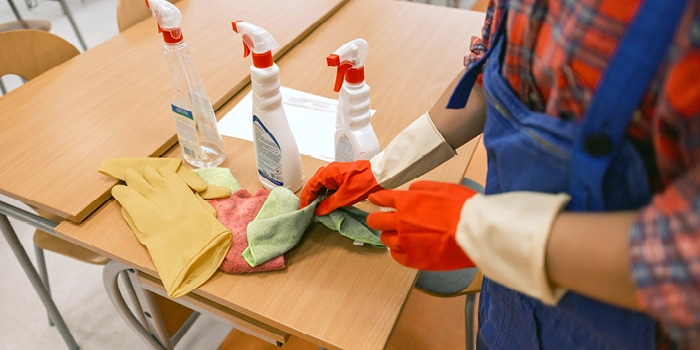
Schools rely on chemicals more than most people realize—from classroom cleaning supplies and restroom disinfectants to maintenance products used during summer deep cleans and facility repairs. While these products are essential for maintaining safe, healthy environments, improper handling or storage can lead to injuries, exposures, or long-term health risks.
These chemical safety tips are designed to help school staff safely use, store, and manage cleaning and maintenance chemicals—especially during summer months when deep cleaning and facility projects are in full swing.
The Occupational Safety and Health Administration (OSHA) emphasizes that proper labeling, training, and safe handling practices are key to reducing chemical-related incidents in the workplace.
Chemical handling safety tips
Chemical exposure risks in schools often come from everyday tasks like mixing cleaning solutions, disinfecting surfaces, or using maintenance products in confined spaces. Small mistakes—like improper dilution or mixing incompatible chemicals—can lead to burns, respiratory irritation, or dangerous fumes.
1. Always read the label first
Before using any product, review the manufacturer’s instructions, hazard warnings, and dilution guidelines. Labels are the first line of defense against misuse.
2. Never mix chemicals
Certain combinations—like bleach and ammonia—can create toxic gases. Staff should be trained to use one product at a time and avoid “shortcut” mixing.
3. Use proper personal protective equipment (PPE)
Gloves, eye protection, and, when needed, masks or respirators help reduce exposure risks during cleaning or maintenance tasks.
4. Ensure proper ventilation
When using chemicals indoors, open windows or use mechanical ventilation systems to reduce inhalation exposure—especially in restrooms, locker rooms, or utility spaces.
5. Train staff regularly
Refresh training on chemical use, labeling systems, and spill response procedures. The CDC recommends ongoing training for workers who handle hazardous substances.
Cleaning chemical safety tips
Cleaning is one of the most chemical-intensive activities in schools, especially during summer deep cleaning projects when classrooms, gyms, cafeterias, and common areas receive extra attention.
6. Use only approved cleaning products
Schools should standardize cleaning products to reduce confusion and ensure staff are familiar with proper usage and dilution.
7. Follow dilution instructions carefully
More chemical does not mean better cleaning. Incorrect dilution can reduce effectiveness or increase health risks.
8. Avoid spraying in occupied or poorly ventilated spaces
Aerosolized chemicals can irritate eyes, skin, and respiratory systems. Whenever possible, apply products using cloths or wipes instead of sprays.
Chemical storage safety tips
Improper storage is a common but preventable source of chemical incidents in schools. During summer months, storage areas may be reorganized or accessed more frequently during maintenance projects.
9. Store chemicals in labeled, original containers
Never transfer chemicals into unlabeled bottles or food containers. Clear labeling helps prevent accidental misuse.
10. Keep incompatible chemicals separated
Store acids, bases, and oxidizers in designated areas to prevent dangerous reactions. Follow manufacturer and Safety Data Sheet (SDS) guidance for storage compatibility.
OSHA requires that hazardous chemicals be properly labeled and stored to ensure employee safety and reduce exposure risks.
Strong chemical safety habits start with consistency
Chemical safety in schools isn’t just about compliance—it’s about creating predictable, safe routines that protect staff, students, and facilities. Small habits like reading labels, using PPE, and storing products correctly can significantly reduce the risk of incidents.