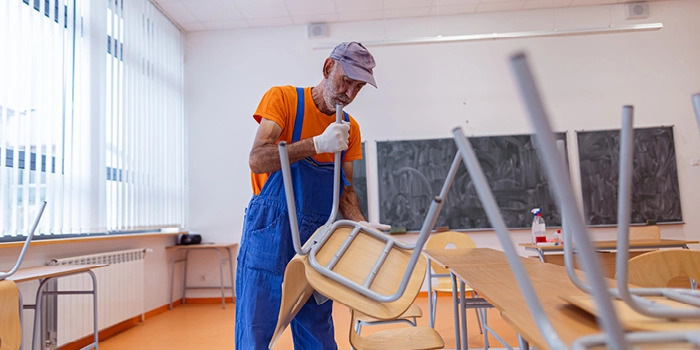
Summer may mean empty classrooms, but school buildings rarely sit still. Between maintenance projects, deep cleaning, athletic programs, and facility upgrades, many school employees stay busy long after the final bell rings.
With changing routines, physical labor, and warmer temperatures, summer can also bring added injury risks. A few proactive safety steps can help schools protect employees, reduce disruptions, and keep projects moving safely through the season.
Here are several injury prevention tips schools can use to help reduce common workplace injuries during summer operations.
Workplace injury prevention tips
Summer work often includes lifting furniture, moving equipment, floor stripping, painting, and maintenance tasks that employees may not perform every day. Changes in routine can increase the likelihood of strains, slips, and overexertion injuries.
Creating a culture that prioritizes workplace safety, communication, and proper training can help reduce preventable incidents.
The Occupational Safety and Health Administration (OSHA) recommends employers provide proper training, personal protective equipment, and safe work practices to help reduce workplace injuries.
Back injury prevention tips
Back strains are one of the most common workplace injuries, especially during projects involving lifting, pushing, or repetitive movement. Summer tasks like moving desks, lifting boxes, rearranging classrooms, or handling maintenance equipment can place extra strain on the back if proper lifting techniques aren’t followed.
Follow these tips to help prevent back injuries:
• Lift with your legs, not your back
• Keep loads close to your body
• Avoid twisting while carrying items; keep shoulders, hips, and feet aligned
• Break down heavy loads when possible
• Use carts, dollies, or lifting equipment for larger items
• Ask for team lifting assistance when needed
Encouraging employees to slow down and use proper lifting techniques can help reduce muscle strains and lost work time.
Knee injury prevention tips
Custodial and maintenance teams often spend long periods kneeling, bending, and working on hard surfaces during summer deep cleaning projects. Floor stripping, waxing, and detailed cleaning can place repeated stress on knees and joints over time.
Knee injury prevention tips include:
• Use knee pads during floor work
• Alternate tasks to avoid repetitive strain
• Take short stretch breaks throughout the day
• Use long-handled tools when possible to reduce kneeling
• Wear supportive, slip-resistant footwear
Reducing repetitive stress can help employees stay more comfortable and lower the risk of overuse injuries.
Hand injury prevention tips
School maintenance projects often involve tools, cleaning chemicals, and equipment that can increase the risk of cuts, burns, pinches, or skin irritation.
Hand injuries can happen quickly during repetitive or fast-paced work.
Use these hand injury prevention tips:
• Wear task-appropriate gloves
• Inspect tools and equipment before use
• Store sharp tools properly
• Follow chemical handling instructions carefully
• Keep hands clear of moving equipment parts
The Centers for Disease Control and Prevention (CDC) also recommends proper hand protection and chemical safety practices when handling cleaning products.
Head injury prevention tips
Even during summer break, schools can become active work zones with ladders, equipment, ceiling repairs, and contractor activity. Employees working around maintenance areas may face head injury risks from falling objects, low-clearance areas, or accidental slips and falls.
Head injury prevention tips include:
• Keep work areas organized and free of clutter
• Before climbing a ladder, check around for hazards and move the ladder if needed
• Clearly mark maintenance zones
• Wear proper protective equipment when required
• Report damaged ceilings, shelving, or fixtures promptly
Good housekeeping and communication can go a long way toward reducing preventable incidents.
Physical injury prevention tips for overexertion and fatigue
Overexertion injuries are common during summer maintenance work, especially when employees are working in heat, lifting repeatedly, or trying to complete projects quickly before the school year begins.
Fatigue can increase the likelihood of strains, slips, falls and other workplace injuries.
Physical injury prevention tips include:
• Encourage regular hydration breaks
• Rotate physically demanding tasks
• Allow time for rest and recovery
• Start shifts with stretching or warm-up exercises
• Watch for signs of heat stress or exhaustion
The National Safety Council notes that overexertion remains one of the leading causes of workplace injuries.
Work injury prevention starts with planning
Many summer injuries can be prevented through proactive planning, employee training, and consistent safety practices.
Before summer projects begin, schools can help reduce risks by:
• Reviewing safety procedures with staff
• Inspecting tools and equipment
• Identify and eliminate hazards in work areas before starting work
• Providing proper PPE
• Setting realistic project timelines
• Encouraging employees to report hazards early
When schools prioritize safety during summer operations, they help protect employees while keeping maintenance projects on track for the upcoming school year.