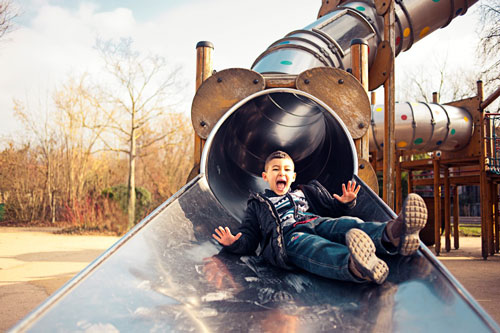
Slides are a staple of childhood fun, but ensuring that you’re following adequate safety measures is vital to preventing accidents. Here are some things to consider when installing and maintaining playground slides.
Playground slide safety tips
- Structural stability: Ensure the slide is securely anchored, with sturdy handrails and non-slip steps. Position it away from direct sunlight to prevent burns from hot surfaces. Choosing a slide with a non-metallic surface will also help reduce the risk of burns.
- Platform safety: A platform at the top of the slide allows children to transition from standing to sitting down. The platform should be horizontal, at least 19 inches long for toddlers and 14 inches long for preschool-age or older children. Make sure it’s at least as wide as the slide chute and surrounded by barriers designed to prevent falls. A bar or hood over the platform will guide kids to sit down. Finally, provide handholds for support and eliminate any gaps where clothing or body parts could get caught.
- Safe landing: The bottom of the slide, or exit area, should include extra space without an incline to allow children to regain their balance. It should be rounded to prevent injuries and located in a low-traffic area. For toddlers, the exit area should be 7-10 inches long and no more than six inches above the protective surfacing on the ground. For preschool and school-age children, the exit area should be at least 11 inches long. If the slide is more than four feet high, it should be 7-15 inches above the protective surfacing.
- Adequate use zone: Keep the area around the slide safe for kids to play by covering it with a protective surfacing such as soft rubber or wood chips. For taller slides, make sure the space in front of the slide’s exit is equal to the height of the platform, but no more than eight feet.
- Choosing the right surfacing: Use a surfacing material recommended by ASTM F1292 beneath and around slides to help cushion falls. Check regularly to make sure the ground covering is thick enough and in good condition to provide the protection needed. Consider options like wood chips, rubber mats or poured surfaces for shock absorption and stability. If you’re using loose-fill materials like wood chips or sand, it’s a good idea to place rubber mats at the bottom of the slide to prevent the loose material from moving around too much.
Remember, keeping safety a top priority not only keeps the fun alive on the playground but also creates lasting memories for our little adventurers. So, don’t forget to use a safety checklist—it’s the key to keeping our playgrounds safe and full of fun!
Loading...
Loading...